


SEO Authority: Types, Metrics, & Strategies
Building SEO authority is crucial for websites and is one of the pillars of organic marketing. It can be a massive visibility boost and instil trust, especially with the modern shift towards heavier EEAT measures and AI optimisation. Let’s look at the latest findings on authority scores and what different types of authority there are.
Components of an SEO Authority Score
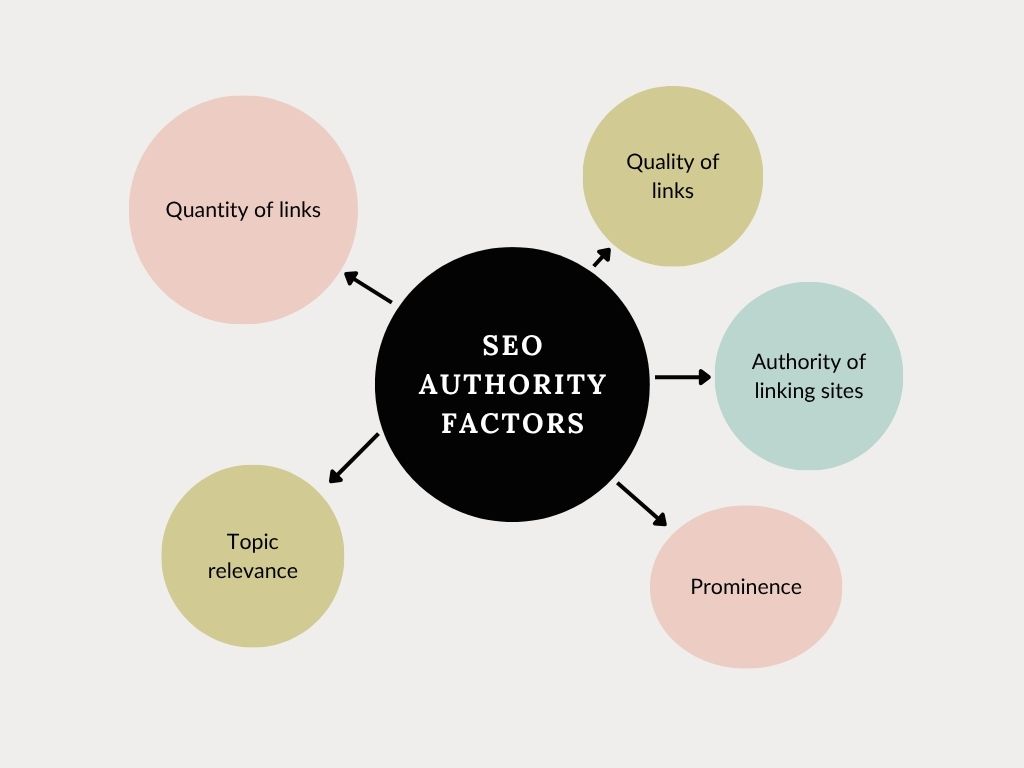
- Quantity of links: The number of links linking back to you really matters, signalling to Google that your page is desirable as a source of info.
- Quality of links: The links need to be from websites with good website health, offering good indicators to Google. Some indicators of quality include high traffic, low toxicity, high-domain ranking, and the desirability of the link.
- Topic relevance: Aside from quantitative measures, the topic cluster of the website is crucial. Websites with similar topical keywords to yours are the best for targeting that particular topic. This indicates that the link is actually relevant to your segment.
- Prominence: Being prominent in your field is important, with websites that have .edu, .gov, and other types of URLs given priority. Being linked a lot by other sources in professional contexts can also improve prominence. Similarly, you can signal prominence with an about page, editorial standards, and author bios that build trust.
- Authority of linking sites: Finally, the domain authority of the sites that are linking to you will also be taken into account.
Building a better authority score SEO workflow is crucial for modern companies. This is also where brand and topical authority come in, which we will cover below.
But first, let’s clear up a few similar terms that often get conflated.
Domain Authority vs Authority Score
Domain Authority (DA) was developed by Moz in 2004 as a metric that indicates a domain’s likelihood of ranking in search. Ranging from 1 to 100, the higher the score, the more your website demonstrates authority or expertise in a specific area. This can be a great benchmark for judging how well your content will rank in comparison to your competitors. This is dependent on the quantity and authority of the backlinks your site receives.
Authority Score (AS), on the other hand, are a composite metric that was first launched by Semrush. These help assess a website’s overall domain quality and SEO strength. It uses a similar 0-100 rating scale, with higher scores meaning better luck in ranking well on search results.
Domain Rating vs Domain Authority
Domain Rating (DR) was developed by Ahrefs in 2016 to indicate the strength of a website’s backlink profile in comparison with others of a similar type within its database. This is another 100-point scale based on the quantity and authority of referring domains. The higher scores will point towards a higher likelihood that the site’s content carries better search performance than its competitors.
This works similarly to domain authority, but the core difference is that DR measures keyword performance and related metrics rather than backlinks alone. It’s also worth noting that Domain Rating, Domain Authority, and Authority Scores are not confirmed as metrics that Google uses. They are handy in terms of how well the domain is received, but they are not a factor for Google in an official capacity.
How to Improve Domain Authority?
High domain authority websites have quite a few things in common.
- Create high-value linkable assets: Produce content that naturally attracts links—original research, in-depth guides, data visualisations, free tools, surveys, and expert roundups. Aim to be the most comprehensive, add original data, make the content visually appealing, and refresh it regularly.
- Build relationships with peers: Nurture connections with other site owners through social engagement, thoughtful comments, sharing their work, citing them, and meeting at industry events. These could lead to links or collaborations.
- Respond to media and journalist requests: Monitor platforms that match sources with journalists (e.g., Help a B2B Writer, #JournoRequest) and engage with concise, credential-backed answers. Being quoted in news pieces earns authoritative backlinks.
- Audit and clean your backlink profile: Regularly review incoming links with tools like Semrush, Ahrefs, or Search Console. Identify toxic or irrelevant links, disavow harmful ones, and favour a few high-quality backlinks over many low-quality links.
- Fix technical SEO issues: Improve site speed, ensure mobile-friendliness, repair broken links, organise site structure, add schema markup, and use HTTPS. A technically sound site improves user experience and makes the site more link-worthy.
- Strengthen internal linking: Prioritise important pages, employ descriptive anchor text, build pillar content for related posts, and update old pages with links to new content. Natural internal linking helps distribute authority and clarify topic relevance.
- Use digital PR to earn authoritative links: Create newsworthy studies or data, craft concise press materials, build a targeted media list, pitch personalised stories, and follow up politely. Digital PR also secures backlinks from major outlets.
Keep in mind that domain authority grows slowly. Older domains and mature content often perform better, and acquiring quality links takes time. Maintain steady, long-term effort across the other strategies rather than seeking quick fixes.
What is a Good Domain Authority Score?
Generally, any Domain Authority above 40 is quite standard for most industries, while anything above 60 is considered very good. Domain authority scores can vary based on competition, and benchmarks can vary by industry and scale of business.
- DA 1 to 20: This can be fine for new or low-authority sites. This level of DA will let you rank for specific, long-tail keywords with low difficulty.
- DA 20 to 40: This level is where it gets more competitive for niche and local searches.
- DA 40 to 50: This is the average across most industries for established sites.
- DA 50 to 60: Competitive for mid-difficulty national terms.
- DA 60 and above: Above 60, websites become far more competitive and authoritative in a subject. They will (in theory) drive better SERP performance.
How to Build Topical Authority?
Topic authority is crucial for websites that wish to be better renowned within their niche. It can demonstrate dominance in a field and in crucial keywords.
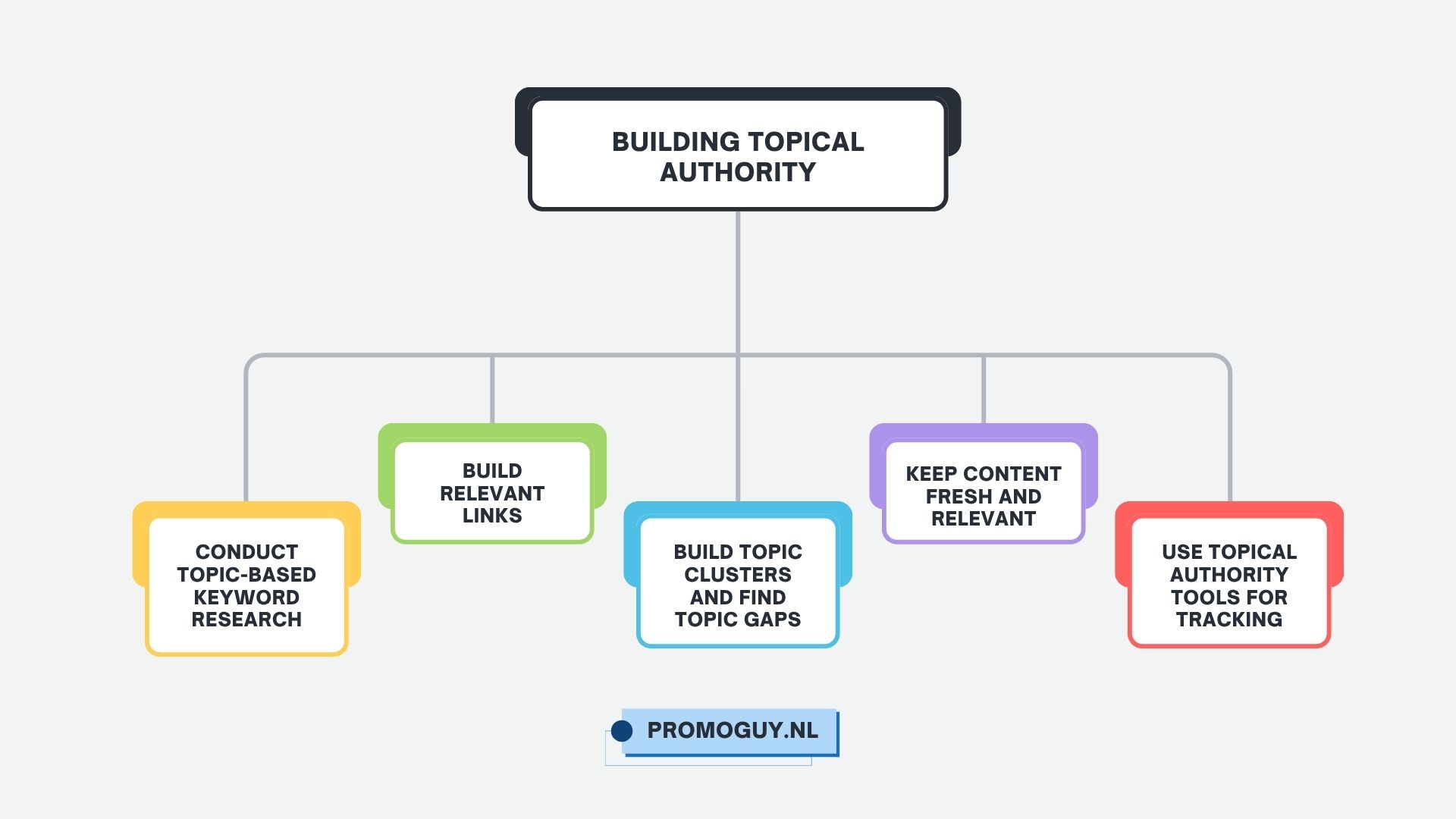
- Conduct topic-based keyword research: Choose the specific seed keywords you want and break them down into the best related keywords that build a story of competence within your field. If you do digital marketing, separate yourself from standard marketing by using keywords related to digital, build niches in your services, and perform competitive analysis using competitors as a benchmark.
- Build relevant links: Create better links by finding sites that can link to you within your niche. Make sure they also have a similar field to yours. Mind your anchor texts while also placing links strategically.
- Build topic clusters and find topic gaps: Create a group of interlinked pages that write about the same subject in different ways and with different subtopics. This will help you cover more ground while making sure you are finding wider audiences. You should also know which topics to leave out.
- Keep content fresh and relevant: Refresh your content or add newer additions to key pillar pages. New keywords can help revitalise crucial pages. Other topics may need a yearly update, but this can vary based on the industry you write about. Look for gaps in your strongest topics.
- Use topical authority tools for tracking: Tools like Ahrefs can give recommendations on how to improve your topical authority. Track the branded keywords and see how they perform over time. If you begin ranking for related search terms you did not specifically optimise for, this may be a sign you are gaining traction.
What is Brand Authority?
Building brand authority in SEO is important for companies as it indicates how trustworthy your online content is in your industry. It can illustrate how much expertise and knowledge you exhibit to consumers. Brands with high authority are perceived as industry leaders, being trusted sources of information. Search engines will be, potentially, more prone to displaying your brand over others. This can be a massive boost for your visibility, provide automatic marketing, and act as great word-of-mouth marketing.
You can improve brand authority by doing the usual SEO and topical authority techniques. Here’s how to improve brand authority signals:
- Be a thought leader: Become a thought leader in your industry. Create content relevant to your field, including white papers, research publications, and case studies. These will automatically build your topic clusters towards more professional ones, separating the brand from non-professional sites in the topic clusters.
- Build brand mentions, citations, or reviews: Build brand authority through brand mentions, reviews, or citations. Focus on entity-based search optimisation along with traditional keyword-based SEO.
- Ensure consistency: Make sure the basic details of your brand are consistent across all platforms (e.g. name, address, description, and website).
- Implement schema: Use organisation, person, and product schema. While this is less relevant for search these days, it can still be handy for AI crawling.
- Try to get press: Leverage PR using platforms like HARO, which can help you connect with journalists looking for expert quotes.
- Collaborate with other professionals: Publish articles on industry-leading sites through guest posting, if you can. This will add you to the cluster of keywords that match your needs.
- Leverage user-generated content: Add incentives so that customers leave reviews and track customer sentiment. Use branded hashtags so that customers also learn to follow certain keywords.
- Build accessible digital content: Make your content available and make sure it’s easy to search for. Adapt your SEO to what your audience is searching for and update it frequently.