


AI Marketing Bot: We Ran One & Here’s What We Found Out
AI marketing bots have been making the rounds everywhere. From social media to blogs to even automated phone messages, this technology has proliferated everywhere. However, how handy is it for the average person? We decided to test out one of these marketing bots, Taplio, to see if they can operate on their own and grow our social media outreach.
Our test had 3 basic objectives:
- See if the AI could generate human-like content.
- Could we use it to boost engagement?
- Find out whether it stays within the assigned topic parameters.
Note: This article is not a paid promotion for Taplio. We have written this independently of any outside sponsorship or input.
What is an AI Marketing Bot?
AI marketing bots are a diverse series of tools that automate marketing procedures. These can help generate text, social media posts, or images without much human input. When you properly set their parameters, they can be a handy way of putting out relevant content with very little effort.
These tools have become popular across the Internet as they can make menial tasks easier. However, this comes with some caveats. Marketing bots require human supervision and can hallucinate, much like many other programs. They also produce content that is often safe but may lack the creative flair an experienced social media expert brings.
We wanted to test their usefulness and identify any drawbacks, so we ran this experiment. We used Taplio, a specific LinkedIn bot that posts for you, coming up with both topics and text. This was also helpful in that LinkedIn is the most appropriate platform for most businesses (on average).
Marketing Bot Implementation & Uses
The bot we were using costs about $500 a year and took 10 minutes to implement. The package we chose can be costly for an individual user, but it would be fairly cheap for most companies, which is where its strengths lie.
The marketing bot began posting at regular intervals and was able to stay within topics fairly well. We used it to generate posts about all sorts of topics related to marketing, business news, decentralisation, and even post-work leisure and work-life balance. As part of the test, we checked to see how well the posts engaged and whether they were relevant to the reader base. Previously, the account we used did not post as frequently, letting us also see if volume increased engagement.
Needless to say, no one on the platform suspected the account had been replaced by an AI facsimile (also, just to be clear, no AI has been used in writing this article).
So far, the marketing bot was fulfilling all of our objectives quite well. We saw growth in total followers, and impressions were quite high.


The content posted was relevant from an objective perspective. It fit the type of content one would normally see on LinkedIn, and drew engagement from the surrounding crowd. It helped procure impressions, but these came with ups and downs. This indicated that the quality varied. That said, consistency on the account was far better than when operated manually.
On a subjective level, many of the topics raised by the bot were safe and not particularly insightful. While passable for LinkedIn content, it wasn’t the kind of approach that would yield massive returns on engagement. Similarly, some of the language could get repetitive (although LinkedIn can be like that anyway, so I doubt anyone noticed). However, the volume that the bot could post per month made the account stand out among the pack.
Here are a few of the topics the bot broached in the posts:
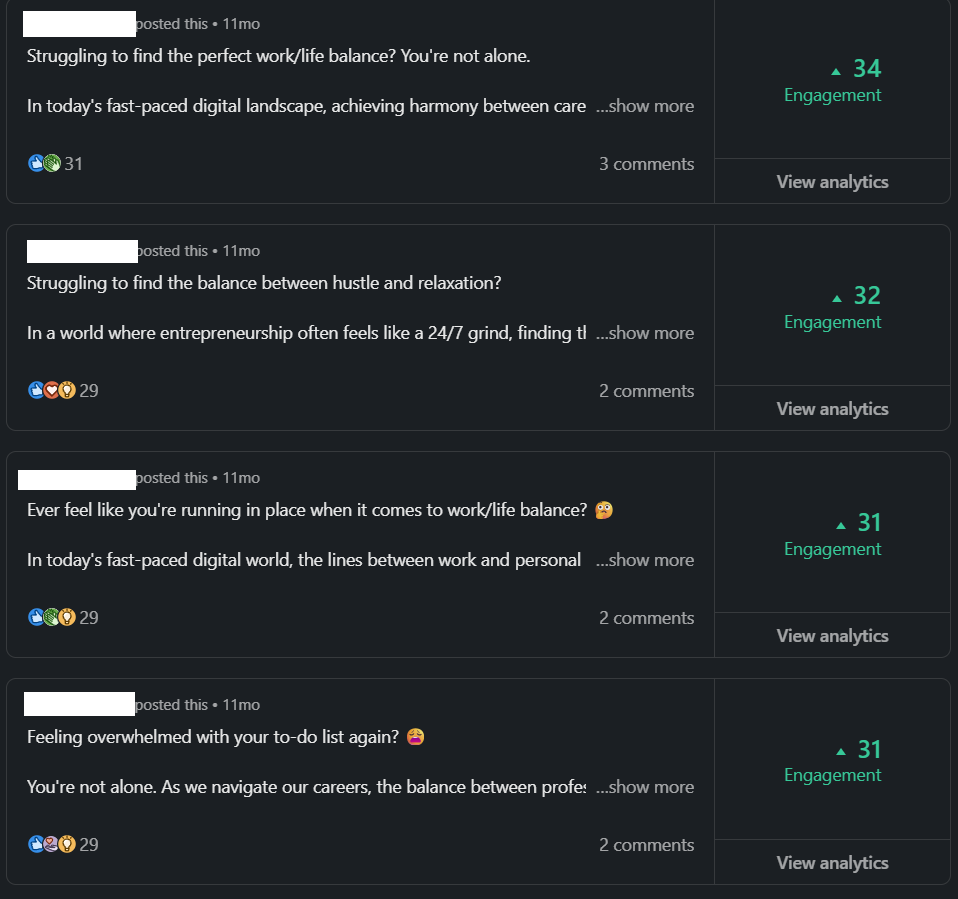
As you can see, these saw positive engagement with quite a few likes and shares. Keep in mind, LinkedIn is not a high engagement platform: many companies get small shares of likes and comments, even on important posts.
Results
The AI marketing bot gave us some interesting positive results, with over 33,572 impressions over the testing period, and an average 30 reactions across posts. Content performance went through quite a few peaks and valleys over time. This varied on changes within the LinkedIn algorithm, the particular topics the bot wrote about, and seasonal usage (LinkedIn has a massive dip in users in early summers).
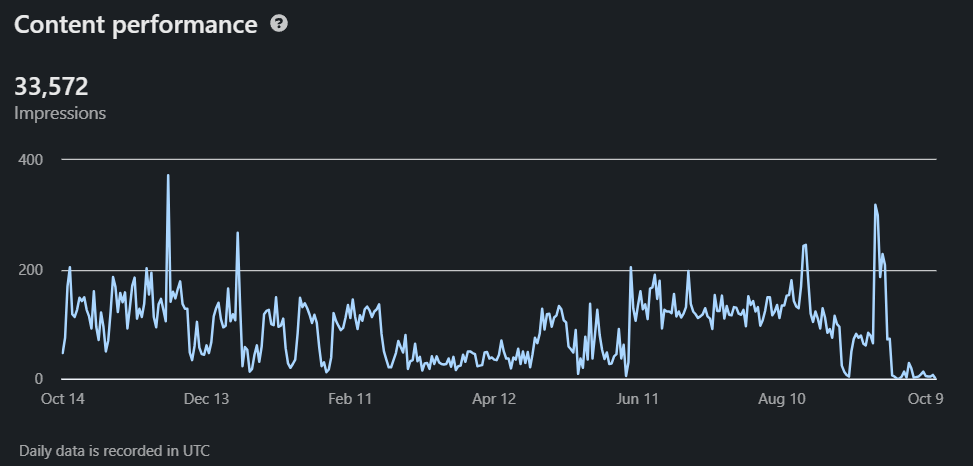
We felt the results were not bad, especially for a bot that we could have put more work into. As this was more of a loose experiment with the technology, we had not experimented heavily or adjusted goals.
Here are some more demographic results showing who paid the most attention to the account:
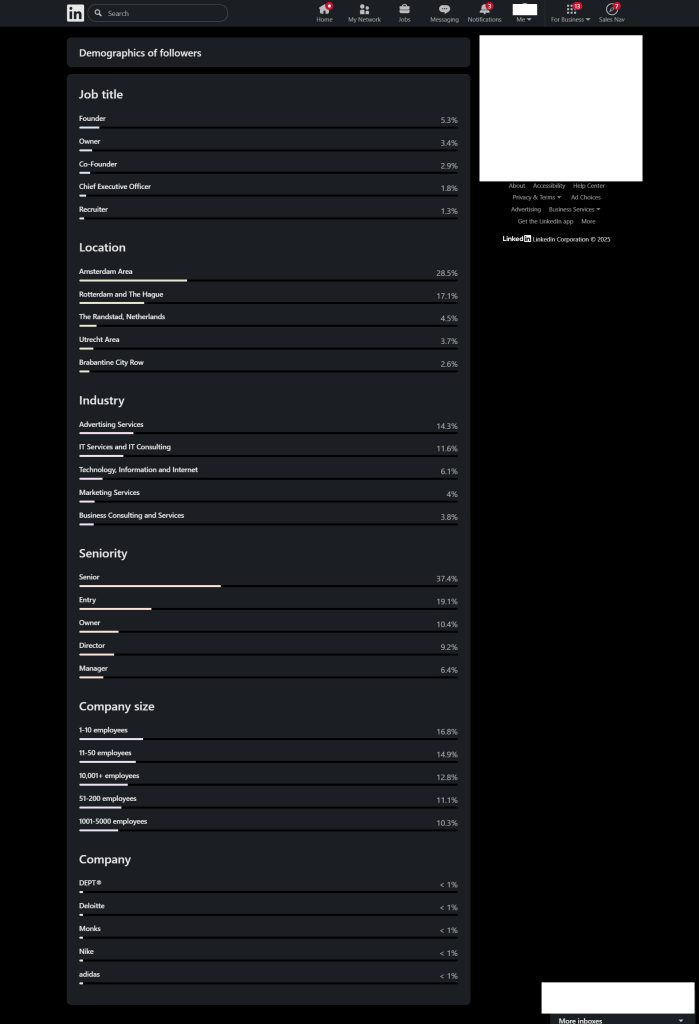
As the data shows, we observed senior management paying loads of attention to the account. These were primarily from smaller businesses, but not to the exclusion of larger companies entirely.
Should You Use an AI Marketing Bot For LinkedIn?
Whether you should use an AI marketing bot comes down to the purpose of your social media activity. If you want volume, it can be an ideal solution. However, even this comes with caveats, since bots are prone to hallucination. Our bot did not experience this, but it was based on very safe, presentable topics. Your mileage may vary, especially if the topics you deal with have the potential to be misconstrued or are prone to bad communication.
However, this ability to produce safer topics may be a boon on LinkedIn, where companies need to preserve their image. You don’t want the software to go wild, so this was a good choice. Despite a few posts that needed revision, it managed perfectly fine. It rarely produced anything we disagreed with, which indicates that its training data is well calibrated for the task.
While the bot can produce things in volume, it is best used for passable and safe content. None of the posts went viral, but they were a great way to produce stable engagement. If that sounds like something up your alley, you should go for it.
Automating marketing isn’t the only way to give your business a leg up. If you’re looking for social media marketing, you may not even need a bot. We can handle that for you ourselves, procuring all the engagement you might need. Contact us to learn more!